
CPAC - Cold Plate Air Cooled Heater/Cooler
- CPAC - Cold Plate Air Cooled Heater/Cooler
- Technical Specifications
- Accessories
- Applications
- Technology
- Certificates & Manuals
Fast, precise, stable heating and cooling for your workstation
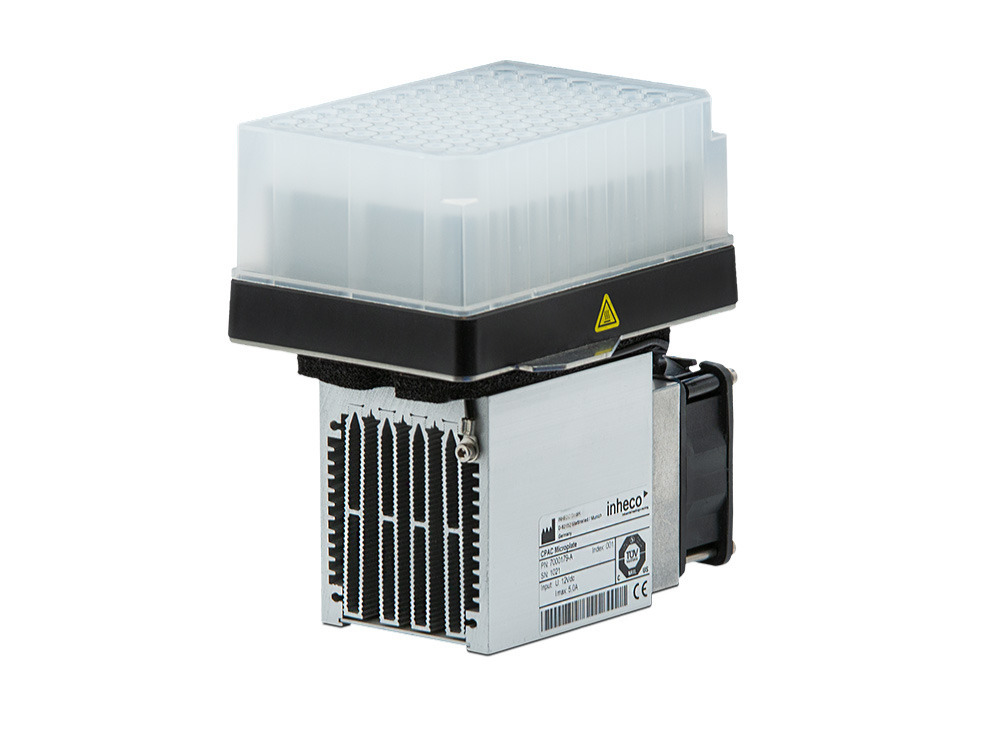
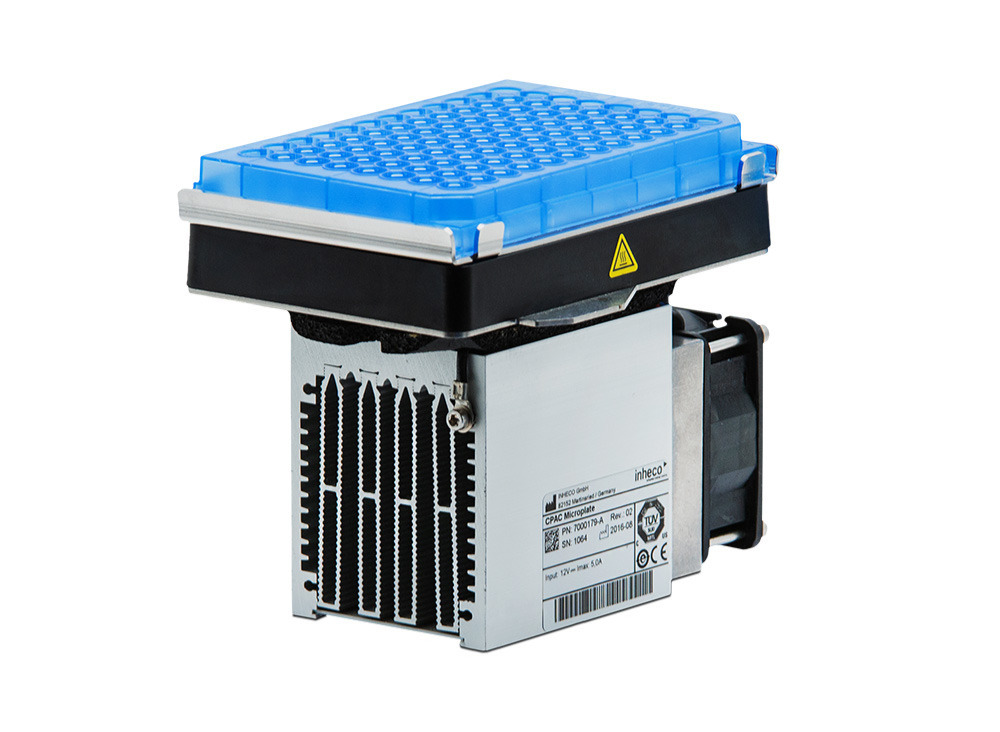
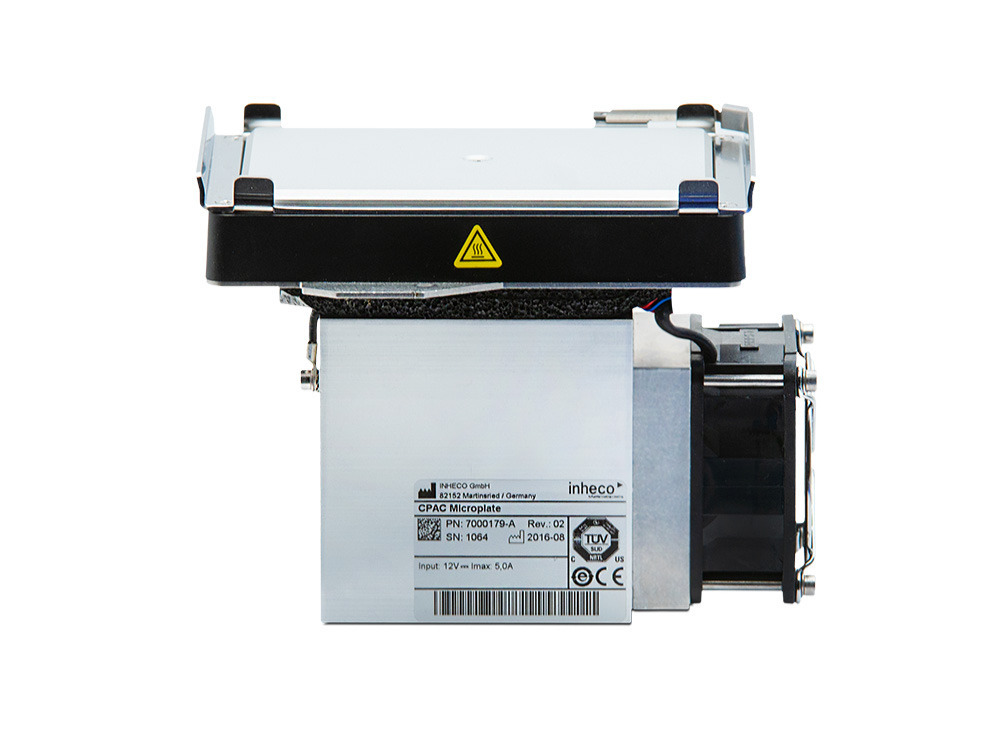
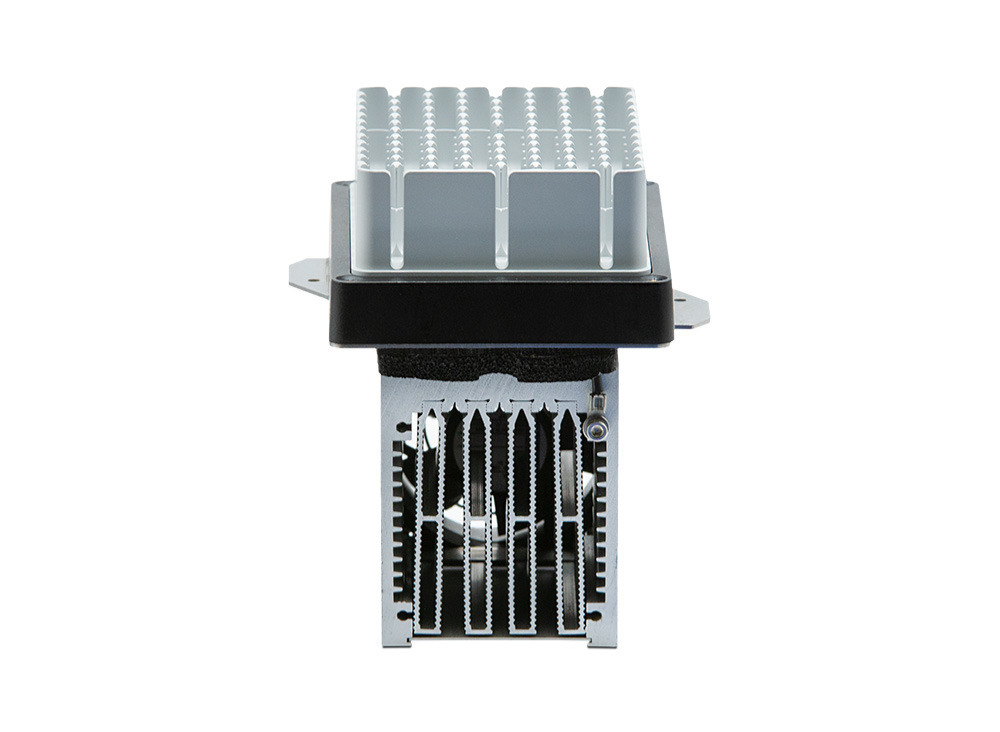
A compact, fully integrated Peltier solution for precise and rapid temperature control of biological and chemical samples. Inheco CPAC instruments deliver energy-efficient, stable temperature performance, flexible use, and easy integration - ideal for demanding liquid handling applications.Easy Integration into robotic workflows
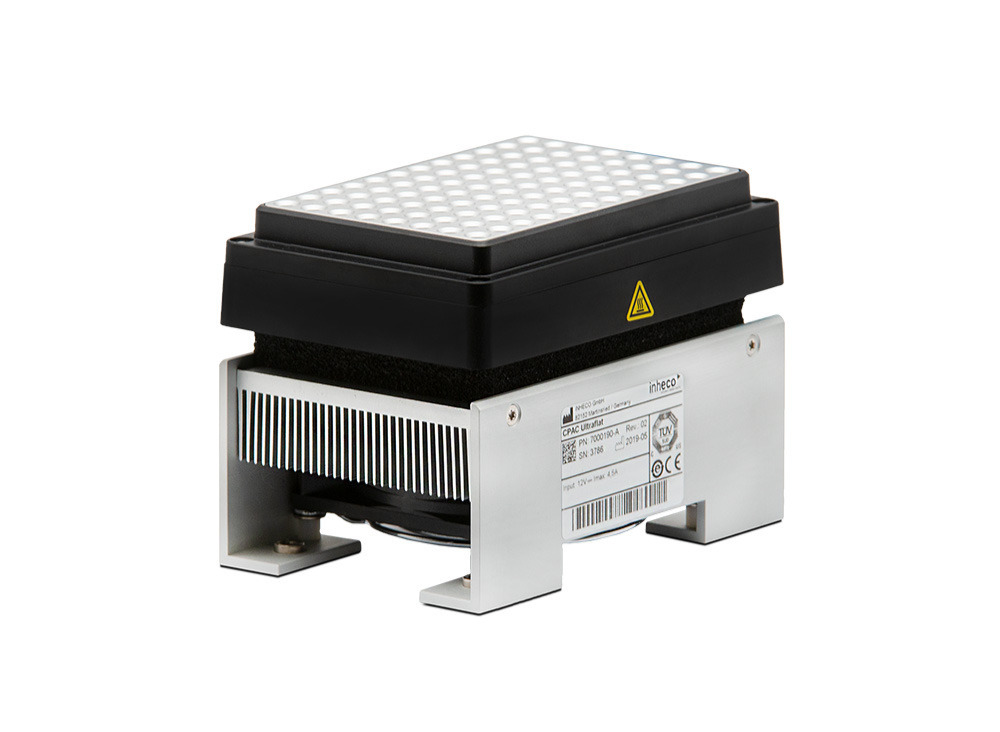
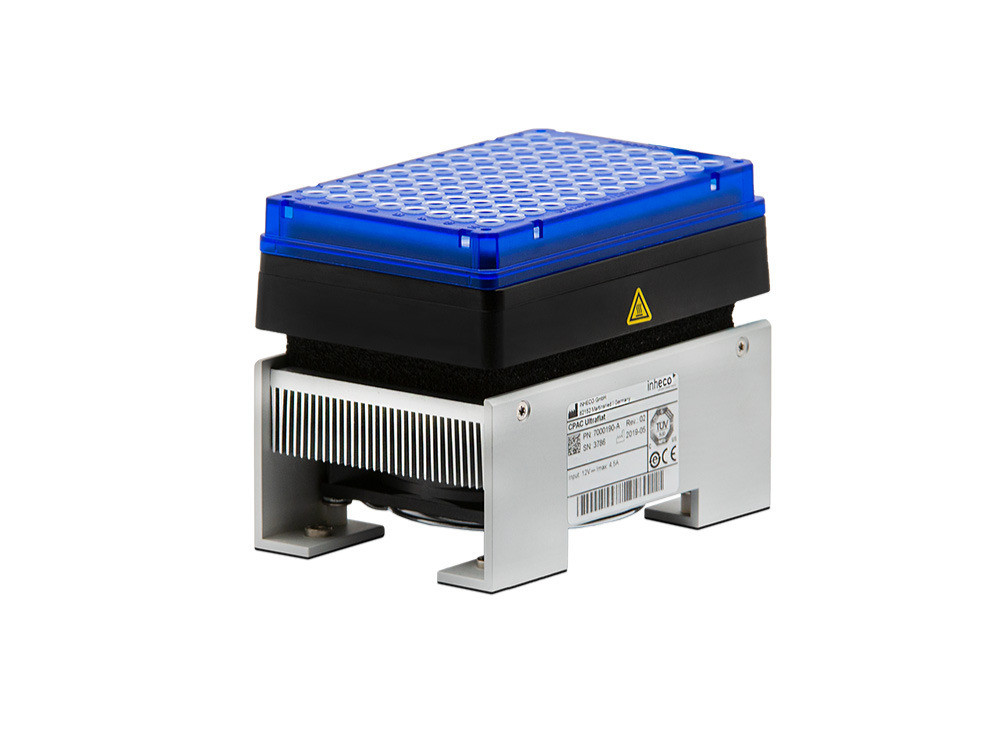
- Occupies only one ANSI/SLAS plate position in the workflow
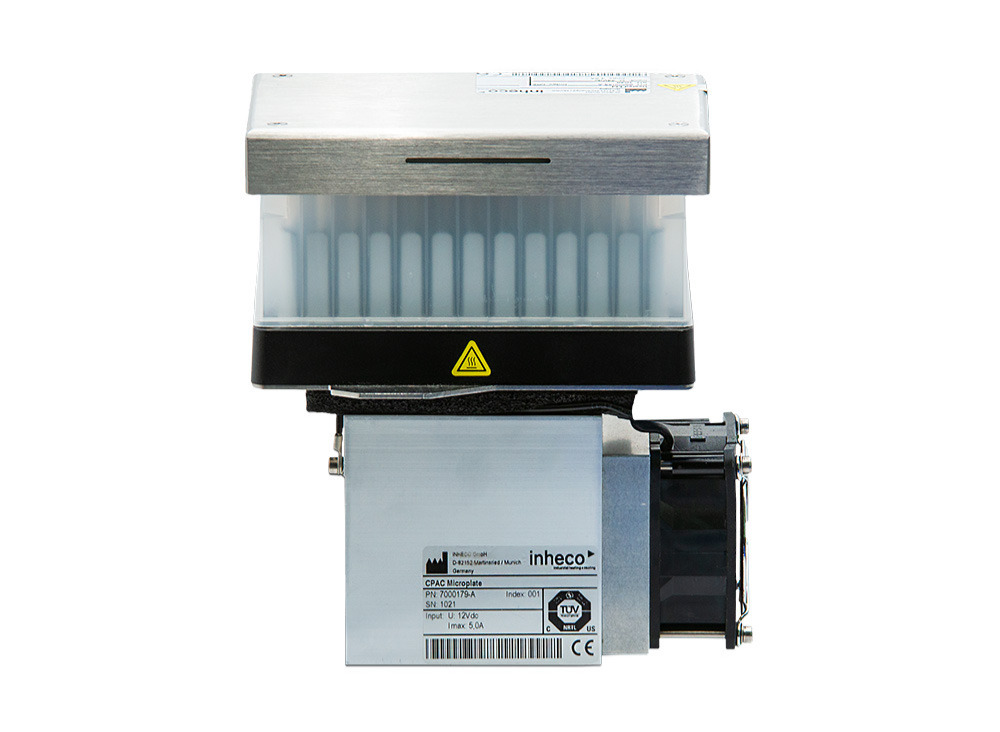
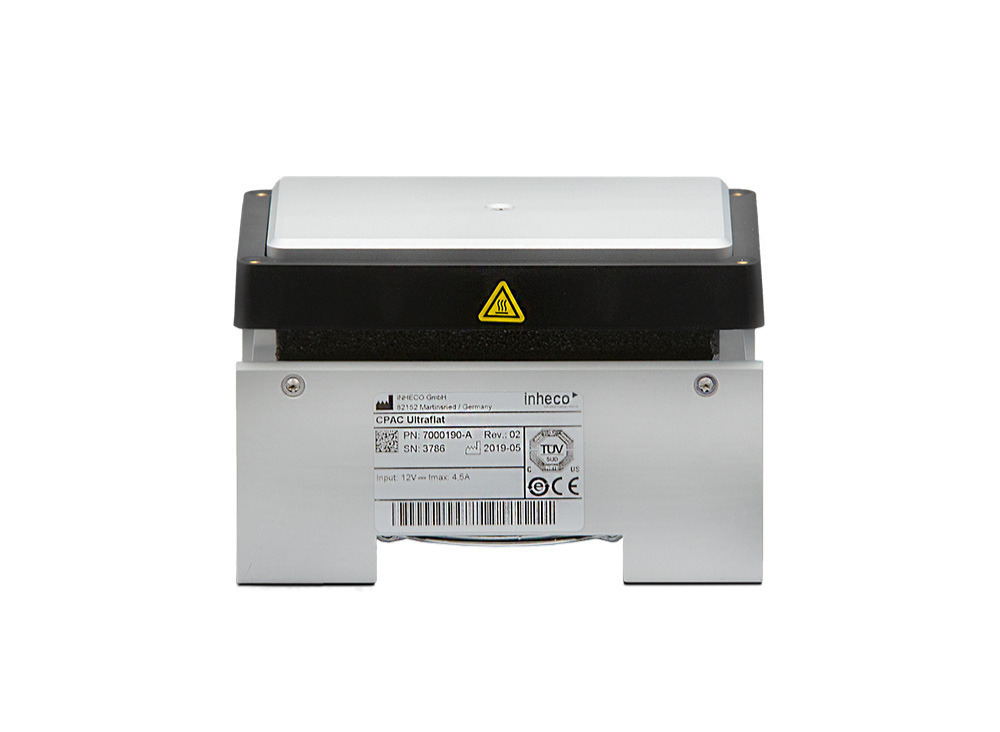
- different CPAC Versions available for integration in the workflow (CPAC Ultraflat) and with ventilation under the workflow (CPAC Microplate)
- controlled with the separate Inheco Single TEC Control unit (STC) off the workflow or with the Inheco Multi TEC Control unit to control up to six instruments in parallel
- aPI information for easy integration available, CPACs are integrated with all major workstation manufacturers
- standard version operates in a temperature range of +4°C to +70°C
- for alternating temperatures, the HT 2-TEC version should be used with a temperature range of +4°C to +110°C
- temperature accuracy of ±0.3 K and uniformity of ±0.5 K
- temperature range minimum 25K below room temperature
- easy gripper access lets you comfortably use the gripper of your choice
- can be used with your disposables including vials and reservoirs, for optimized heat transfer Inheco offers over 200 adapters, manufactured in house
- designed, engineered and made in Germany, rigorous quality control
- global two-year warranty and full customer service including remote support, diagnostic and servicing options
Technical Specifications CPAC
| CPAC type | Microplate 7000179 |
Microplate HT 2TEC 7000163 |
|---|---|---|
| Input voltage / max. current | 12 Vdc / 5.0 A | 24 Vdc / 4.7 A |
| Temperature range | +4 °C to +70 °C [+39.2 °F to +158 °F] | +4 °C to +110 °C [+39.2 °F to +230 °F] |
| Temperature range ambient | 15 °C to +32 °C [+59 °F to 89.6 °F] | |
| Temperature cycling | No | Yes |
| Max reachable temperature difference in the heating mode | Up to 80 K | |
| Max. reachable temperature difference in the cooling mode | Up to 30 K | |
| Sensor type | Two PT100 | |
| Outer dimensions (H x W x L) | 113 mm x 89 mm x 129 mm | 113 mm x 89 mm x 129 mm |
| Weight incl. cord | Approx. 1.0 kg | |
| CPAC type | Ultraflat 7000190 7000193 |
Ultraflat HT 2TEC 7000166 7000165 |
|---|---|---|
| Input voltage / max. current | 12 Vdc / 4.5 A | 24 Vdc / 4.3 A |
| Temperature range | +4 °C to +70 °C [+39.2 °F to +158 °F] | +4 °C to +110 °C [+39.2 °F to +230 °F] |
| Temperature range ambient | 15 °C to +32 °C [+59 °F to 89.6 °F] | |
| Temperature cycling | No | Yes |
| Max reachable temperature difference in the heating mode | Up to 80 K | |
| Max. reachable temperature difference in the cooling mode | Up to 30 K | |
| Sensor type | Two PT100 | |
| Outer dimensions (H x W x L) | 80 mm x 89 mm x 129 mm | 80 mm x 89 mm x 129 mm |
| Weight incl. cord | Approx. 1.0 kg | |
| Environmental conditions | |
|---|---|
| Tolerable relative humidity: | |
| Operation | 30-80% relative |
| Transportation and storage | 10-80% relative |
| Temperature: | |
| Operation | +15 °C to +32 °C [+59 °F to 90 °F] |
| Transportation and storage | -10 °C to +60 °C [+14 °F to 140 °F] |
* Condensate can prevent the CPAC from operating properly and can damage the CPAC. Condensate should be eliminated on a daily basis or more often, for example by heating cycles in between cooling cycles.
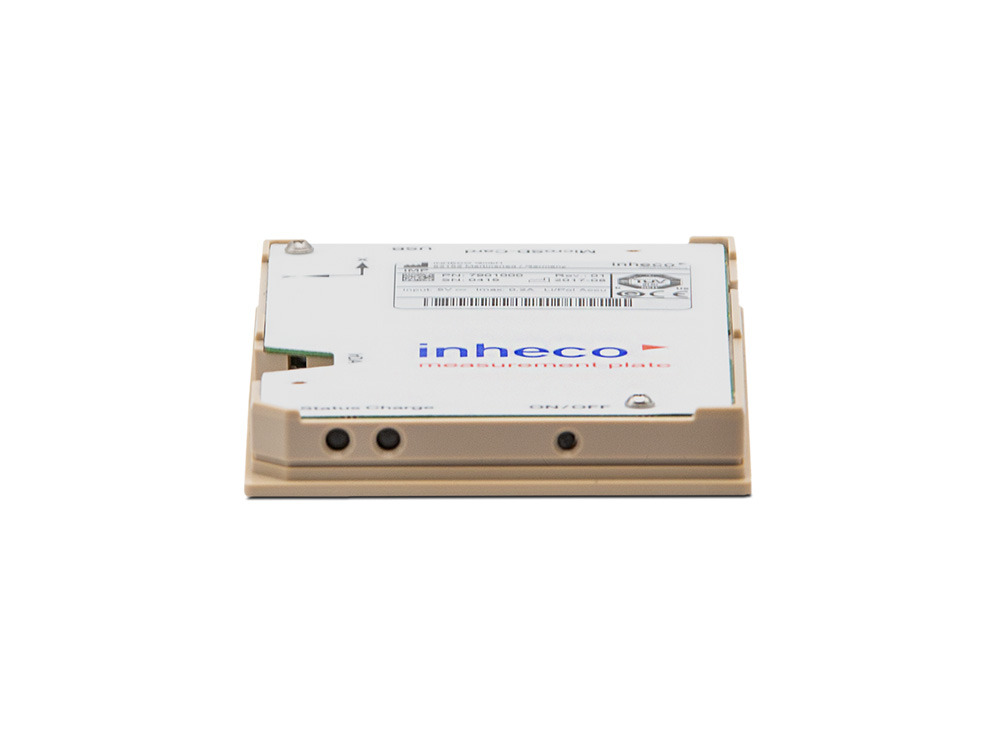
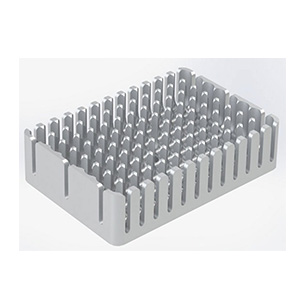
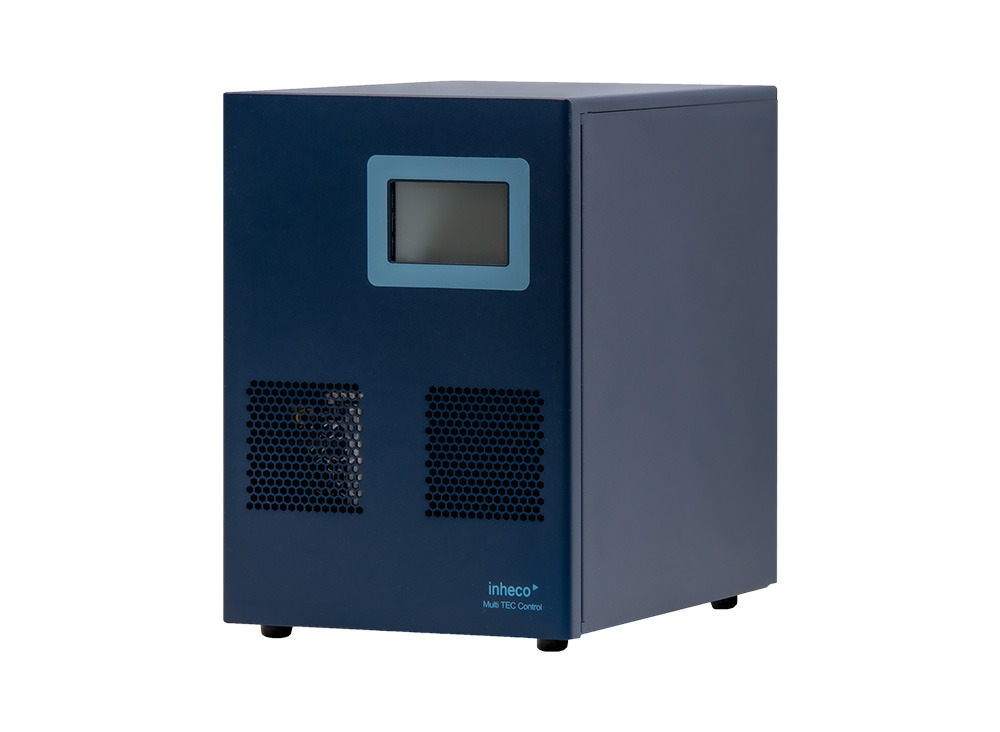
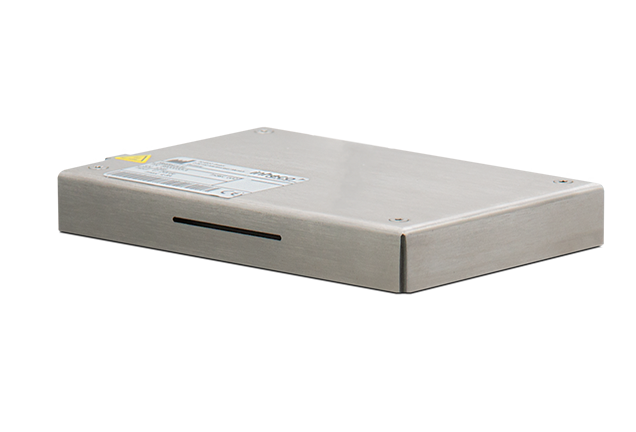
Why use a Cold Plate Air Cooled Heater/Cooler?
Cold Plates using Peltier cooling technology are useful whenever your liquid handling lab needs cooling or heating surfaces. They offer heating and cooling plus temperature control all in one instrument. That makes them particularly suitable when you’re working with cell assays and biological and chemical samples in an automated workflow.What to look for in a Cold Plate Air Cooled Heater/Cooler?
Accurate and uniform heating and cooling are important, as are the ability to maintain temperature precisely. You may also need to consider temperature ramp rates and the maximum achievable temperature.
- Temperature uniformity - delivering identical temperature across the entire block, with identical results for samples in the middle or on the edge of the block, and throughout the run.
- Temperature accuracy - ensuring accurate and stable, reproduceable temperatures for the duration of the run, and for every sample in the block.
- Uniform temperature change (ramp rates) - maintaining temperature uniformity across the entire block.
- Temperature range - maximum and minimum temperature offered.
- Small footprint - delivering the required performance while taking up as little space in the workflow as possible.
- Low profile - to make pipetting and use of taller disposables easier.
Use of the Inheco CPAC
The CPAC is in regular use in NGS Sample Prep and is used for incubation by molecular biologists.The CPAC Microplate is especially useful for enclosed liquid handling platforms (or workstations), when the workflow or samples can overheat if too many instruments without liquid cooling are integrated and waste heat is not efficiently removed. The CPAC microplate can be integrated into the workflow with waste air routed below the workflow.
The CPAC is often used to protect samples from degradation due to changes in heat, and to keep reagents, probes and end products at the correct temperature.
Precise, uniform heating, cooling and temperature control from Inheco CPAC
Heating and coolingAll CPAC models heat and cool using one or two Peltier units.
- Peltier Modules or Thermoelectric Coolers (TECs) use the Peltier effect to create a heat flux between the junction of two different types of materials. A Peltier module is a solid-state active heat pump which transfers heat from one side of the device to the other side against the temperature gradient (from cold to hot), with consumption of electrical energy. TECs run with DC voltage, and it’s easy to control the heat transfer through the module by changing the current. When the polarity of the DC is switched, the TEC swaps from cooling to heating mode. That makes TECs an excellent solution when exact control of temperature and heating and cooling rates are needed.
- Temperature range: +4 °C to +70 °C (TEC versions) or +4°C to +110°C (HT 2-TEC versions).
- HT 2-TEC versions:
Heating from 25 °C to 85 °C in 600 sec: 6 °C/min
Cooling from 90 °C to 25 °C in 700 sec: 5.2 °C/min
Optional Heated Lid
- The Heated Lid can be used as an add-on heater on top of the CPAC, to increase the rate of heating, improve temperature uniformity (especially for deep well plates), and enable longer incubation.
- The Heated Lid helps to avoid condensation at the top of the plate, and reduce losses due to evaporation, without needing the space of a dedicated incubator.
- The flexible cable and low weight (420 g) mean it can be transported by most gripper systems, while being heavy enough to seal the plate, so allowing full automated processing.
- API available. Each Inheco CPAC is quick to connect, and ready for future developments in your lab.